

Melting Point Factors for Common Waxes

Wax melting points are essential to consider when choosing a wax for different applications. A wax’s melting point determines its ability to hold shape and withstand heat. Different wax types have varying melting points, which can be influenced by their chemical composition, purity and processing methods. Exceeding a wax’s melting point alters its physical properties.
Here we explore the melting point factors for common waxes, including microcrystalline, paraffin, soy and beeswax. We also discuss how each wax’s features can impact its performance and suitability for different applications.
| Wax Type | Typical Melting Point (°F / °C) | Typical Applications |
| Microcrystalline | 145-195 °F (63-91 °C) | High melt, heat-resistant |
| Paraffin | 120-160 °F (49-71 °C) | Common, flexible |
| Soy (Low) | ~130 °F (54 °C) | Cleaner burn, softer |
| Soy (High) | ~150 °F (66 °C) | Harder candle |
| Beeswax | ~145 °F (63 °C) | Long burn, natural |
Why Melting Point Matters
Understanding melting point is essential for selecting the right wax for everything from candles and food coatings to industrial packaging and specialty applications.
The wax melting point plays a critical role in how wax performs during processing and in its final application. The temperature at which a wax softens or fully melts affects heat resistance, structural stability, adhesion, and surface finish. A wax with a too-low melting point may deform, bleed, or lose integrity under normal use, whereas a higher-melting-point wax can better withstand heat, friction, and handling.
The melting point also influences how wax interacts with additives like fragrances, dyes, or coatings, as well as how it behaves during pouring, dipping, or extrusion. While all waxes share the same fundamental phase change from solid to liquid, their melting points vary widely based on composition, refinement, and structure. Different wax types are engineered or naturally formed to perform under specific temperature conditions, which is why melting point is often used as a primary selection criterion.
The following wax types illustrate how melting point ranges influence performance across common applications, from candles and food coatings to industrial and specialty uses.
Microcrystalline Wax
Microcrystalline wax is produced by refining petroleum. It’s a versatile material used in many applications, including:
- Cosmetics
- Food preservation and packaging
- Candle production
- Laminated paper products
- Coatings and linings
- Adhesives
- Sealing compositions
- Polishes
Microcrystalline wax is known for its water resistance and ability to provide a protective barrier against moisture and other environmental factors. Industries often use it as a binding agent in products like chewing gum and gummy candies.
Melting Point
Microcrystalline wax has a high melting point, ranging from 145-195 degrees Fahrenheit, depending on the wax grade.
A high melting point makes microcrystalline wax ideal for use in products that require heat resistance. Microcrystalline wax’s melting point is important in candle production, affecting the burn time and overall performance. Waxes with higher melting points tend to burn more slowly and evenly, while waxes with lower melting points may melt too quickly, resulting in a shorter burn time.
In cosmetics and personal care products, microcrystalline wax’s melting point can affect the texture and consistency of the product, as well as its ability to spread and adhere to the skin.
Benefits
The benefits of using microcrystalline wax in products are that it:
- Enhances the texture of cosmetics such as skincare products, foundation and lipstick
- Enhances consistency by making products firmer, thicker or easily spreadable
- Enhances the visual appeal of cosmetics and personal care products by adding color consistency and shine
- Can keep products like lipstick from sweating during temperature fluctuations
- Is more flexible than other waxes, making products that contain it highly tensile
Paraffin Wax
Paraffin wax is a byproduct of petroleum refinement obtained through crude oil distillation. It’s a soft, often colorless and somewhat translucent wax.
Paraffin wax is commonly used in the following applications:
- Lubrication
- Electrical insulation
- Candles
- Crayons
- Cosmetics
- Food coatings
- Wax paper
- Polishes
Melting Point
One of paraffin wax’s key features is its melting point, which is typically between 120-160 degrees Fahrenheit. Several factors can affect the melting point of paraffin wax, including the type of wax used, the size and shape of the wax crystals and the presence of any additives or impurities. Generally speaking, paraffin wax is known for its relatively low melting point, making it easy to work with in various applications.
Benefits
Paraffin wax also has several other valuable properties. For example, it’s relatively odorless and colorless, making it a popular choice for cosmetics and other products with a neutral appearance.
Paraffin wax can help extract perfumes from flowers, form a base for medical ointments, and create a waterproof coating for wood. It also helps ignite wood and paper matchsticks by supplying an easily vaporized hydrocarbon fuel.
Some paraffin waxes may also provide therapeutic heat therapy for the hands and feet, and it has softening and moisturizing effects on the skin. It may help relieve pain in sore joints and muscles due to conditions like osteoarthritis, rheumatoid arthritis, fibromyalgia and other joint mobility issues.
Soy Wax
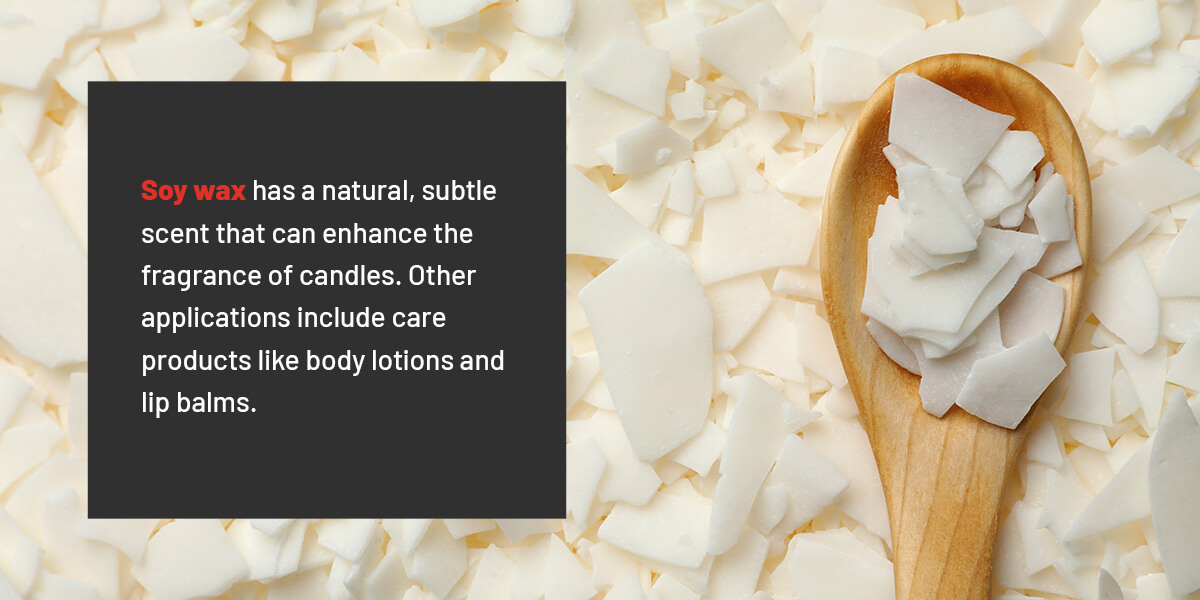
Soy wax is a vegetable wax made from soybean oil. While soy wax is denser than paraffin wax, it’s typically softer and has a lower melting point. It’s a popular choice for candle making because it’s renewable, biodegradable and burns cleaner than paraffin wax.
Soy wax also has a natural, subtle scent that can enhance the fragrance of candles. Other applications include care products like body lotions and lip balms.
Melting Point
One of the key characteristics of soy wax is its relatively low melting point. Low-melt soy wax melts at 130 degrees Fahrenheit, while high-melt soy wax melts at 150 degrees Fahrenheit. This low melting point means soy wax candles will begin to melt and release their fragrance at a lower temperature than other types of candles, such as those made from paraffin wax.
Benefits
Additionally, soy wax has a longer burn time than many other types of wax, making it a cost-effective and sustainable choice for candle makers and consumers alike.
Beeswax
Beeswax is a natural wax produced by honeybees in their hives. It’s a versatile material that people have used for centuries in various applications, including candle-making, cosmetics and woodworking.
Beeswax is known for its unique features, including its melting point and other properties.
Melting Point
Beeswax has a melting point of 145 degrees Fahrenheit. This high melting point makes beeswax ideal for use in candles, as it lets them burn at a higher temperature for longer than other types of wax. Beeswax candles produce a natural, subtle scent that’s pleasant and soothing.
Benefits
Another feature of beeswax is its natural, honey-like color and texture. It is typically a light yellow or brown color, and it has a smooth, waxy texture that’s easy to work with. These features make beeswax ideal for use in cosmetics and skincare products, as it can help moisturize the skin.
In addition to its high melting point and natural color and texture, beeswax has a few other unique properties. For example, it has natural antiseptic properties, making it useful for wounds and other applications.

Find the Best Wax for Your Application With Blended Waxes
At Blended Waxes, we mix two or more types of waxes to create a unique blend with your desired properties. Wax blending can improve the performance and characteristics of wax, such as its melting point, scent throw and burn time.
For example, blending beeswax with soy wax can increase the wax’s melting point and hardness while also enhancing its natural scent and texture. Combining paraffin wax with soy wax creates a wax with an improved scent throw and a longer burn time.
Wax blending can also help reduce costs by combining different wax types to create a more affordable blend that still meets the desired performance and texture requirements.
Blended Waxes can create a blend based on your needs, whether you’re in the cosmetic, art, medical, construction or packaging industry. You can match an existing blend, swap out ingredients or opt for a brand new product with our custom wax blending process. Reach out to us today to start a conversation about your wax needs and how we can meet them.